Swimming Pond vs Natural Pool: What’s the Difference?

~ 5 min read

Introduction

People often use the terms swimming pond and natural pool interchangeably. Both describe a beautiful body of water designed for swimming without chlorine. Both use natural biological processes rather than chemical sterilisation. And both can provide clear, clean and healthy swimming water.

However, there is an important distinction.

Definition of a swimming pond

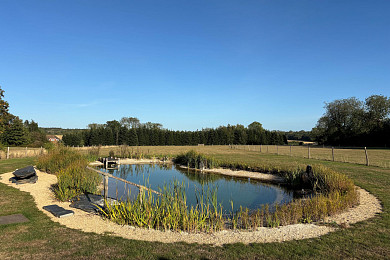
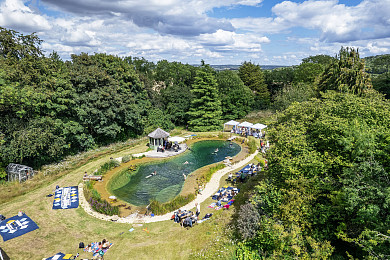
At Gartenart, we generally use the term swimming pond to describe a natural swimming feature that includes planted and/or filtration zones as part of the overall design. These can look very naturalistic, with soft edges, aquatic planting, boulders and shingle, or they can be more formal, with crisp lines and a stronger architectural structure.

We call the first "naturalistic" and the second "semi-formal", but both are swimming ponds. 

Definition of a natural pool

A natural pool, on the other hand, has no planted filtration zone and often looks more similar to a conventional swimming pool. It still avoids chlorine and still works on the same low-nutrient principle, but the filtration is separate from the main swimming area and may be hidden under a deck or housed nearby.

What is a swimming pond?

A swimming pond is a living body of water designed for swimming. It is not a conventional garden pond that happens to be deep enough to swim in, and it is not a swimming pool with a few plants added afterwards.

A properly designed swimming pond is a balanced aquatic system. The water is kept clear by maintaining very low nutrient levels and by encouraging the natural microscopic life that exists in clean, healthy water.

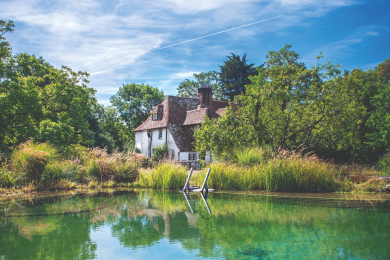
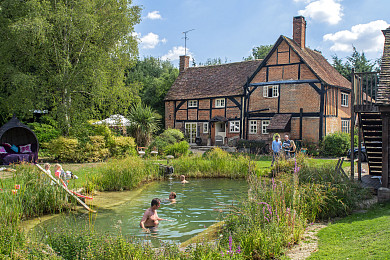
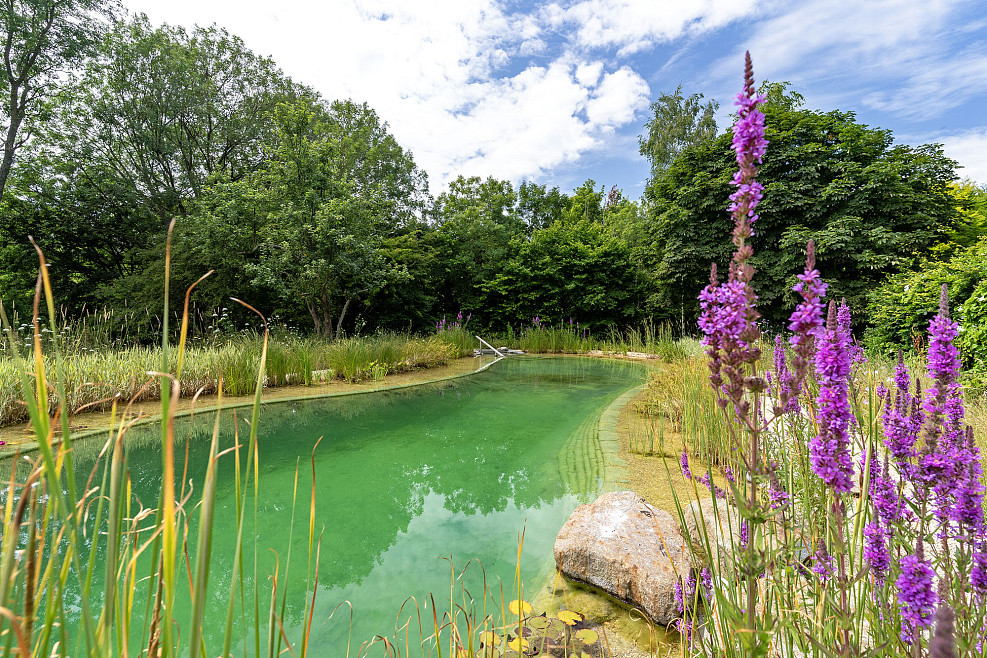
In a swimming pond, the planted zone and filtration zone are visible parts of the design. In most naturalistic designs, the planting wraps around the swimming area and helps the pond sit comfortably within the garden. The result can feel more like swimming in a clear lake or natural spring than swimming in a conventional pool.

Swimming ponds can be designed in different styles:

  • Naturalistic swimming ponds, with organic shapes, aquatic planting, boulders, shingle, timber jetties and a soft connection to the surrounding garden.
  • Semi-formal swimming ponds, with a more defined swimming area, often using walls, coping, steps or terraces, while still retaining planted filtration zones and natural water.

The choice depends on the garden, the house, the intended use and the aesthetic the client wants to achieve.

In a naturalistic swimming pond, the planted and filtration zones are part of the beauty of the design.

What is a natural pool?

A natural pool is also a chlorine-free swimming system, but it usually looks more like a conventional swimming pool. The swimming area is often clean-lined, simple and uncluttered, and there are normally no plants in the main body of water.

Instead, the biological filtration is kept separate. Depending on the design, this filtration zone may be housed away from the pool, beside it, or hidden under a deck.

This makes natural pools particularly appealing to people who like the idea of natural water but prefer a more architectural or minimal appearance. A natural pool may suit a contemporary house, a courtyard, a formal garden, or a client who wants the look of a pool but not the chlorine.

The result is different visually, but the objective is the same: clear, clean, low-nutrient swimming water without chemical sterilisation.

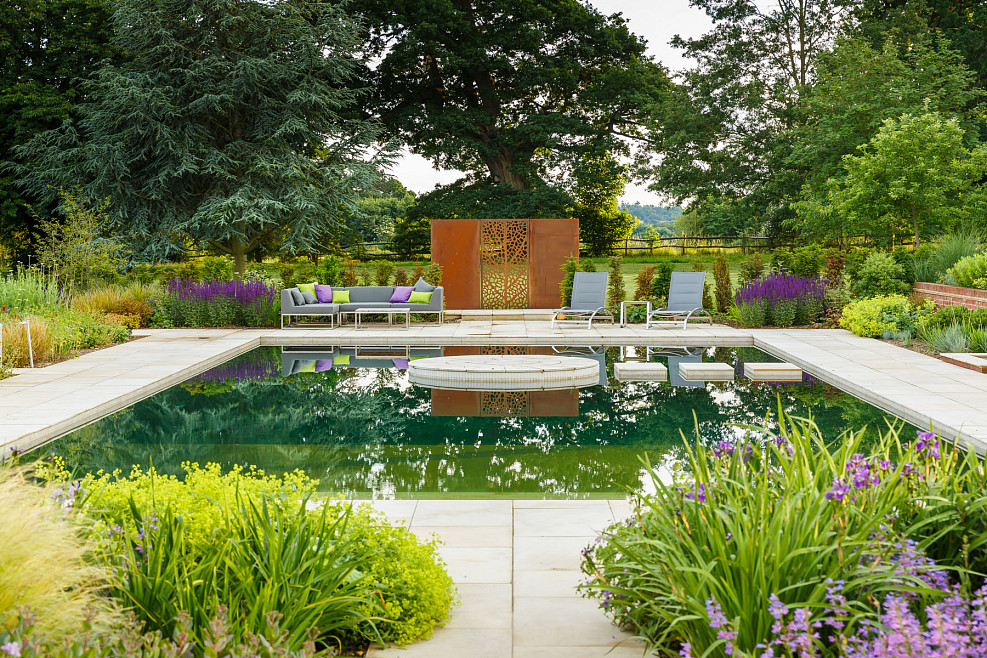
A natural pool usually has no plants in the swimming area and can look more similar to a conventional swimming pool.

How does the water stay clean?

The basic principle is the same in both swimming ponds and natural pools.

In conventional swimming pools, chemicals such as chlorine are used to kill microorganisms in the water. In a swimming pond or natural pool, the aim is not to sterilise the water. Instead, the system is designed so that microscopic life exists in balance.

In clean natural water, nutrients are kept low. This prevents single-celled algae and blanketweed (string algae) from growing out of control. The biological system, including bacteria, phytoplankton and zooplankton, works together to maintain clear water.

In a swimming pond, water is also filtered through shingle and specialist filtration media using a small pump. Plants can perform a useful role by taking nutrients out of the water as they grow. In a natural pool, the same low-nutrient principle applies, but the filtration is generally handled in a separate, more hidden system.

The design and technical specification are important. A swimming pond is not just a hole in the ground filled with water. It is a designed ecosystem.
Which looks more natural?

A naturalistic swimming pond will usually look the most natural. It can be designed to blend into the garden, with planting, boulders, gravel beaches, timber jetties, stepping stones and soft marginal areas.

Aesthetically, a semi-formal swimming pond sits somewhere between a natural pond and a conventional pool. It may have a rectangular or geometric swimming area, but still include planted areas and natural filtration.

A natural pool tends to look the most “pool-like”. It may have sharper edges, paving, decking, steps, lighting and a more contemporary finish. The biological filtration zone or equipment, if visible at all, is usually secondary to the main swimming area.

None of these options is better in every case. They simply suit different properties and different tastes.

Which is best for your garden?

A swimming pond may be the better choice if you want the water to feel fully integrated into the garden. It works particularly well in larger gardens, country settings, and properties where the client wants a beautiful year-round landscape feature as much as a place to swim.

A semi-formal swimming pond may be right if you want a clearer swimming shape or a more designed edge, but still want planting, natural water and a softer garden feel.

A natural pool may be the better option if you want a more contemporary swimming pool aesthetic, but without chlorine. It may also be a more practical option if you have less space.  It can suit modern houses, urban locations, courtyards, terraces and gardens where a clean architectural line is important.

The real question: what experience do you want?

The best starting point is not the terminology. It is the experience you want to create.

Do you want to step into water that feels like a natural lake, and swim at eye level with the plants and dragonflies? Do you want a pond that changes with the seasons and becomes part of the garden? Do you want a crisp rectangular swimming area with natural water? Or do you want something that looks very close to a conventional pool, but without chlorine?

Once that is clear, the technical design can follow.

At Gartenart, we design and build swimming ponds and natural pools across a range of styles, from naturalistic ponds to formal natural pools and commercial projects. The common thread is always the same: clear, clean, healthy water, designed beautifully and built to last.

To see which style might suit your property, view our showcase sections for naturalistic swimming ponds, semi-formal swimming ponds, and natural pools, or contact us to arrange a design consultation.